GPT-6(Astra) launched this week. It’s an insane step-up model. But one small part of the launch caught my attention more than the benchmarks. OpenAI showed Astra operating KiCad, taking a schematic, placing components and routing the PCB as well as a great intern would. We are on the cusp of massive takeoff.
I wrote about AI in electrical engineering almost two years ago, and my view has only become stronger. Over the next couple of years, I think conventional embedded product design will become heavily AI-assisted and to a great extent automated.
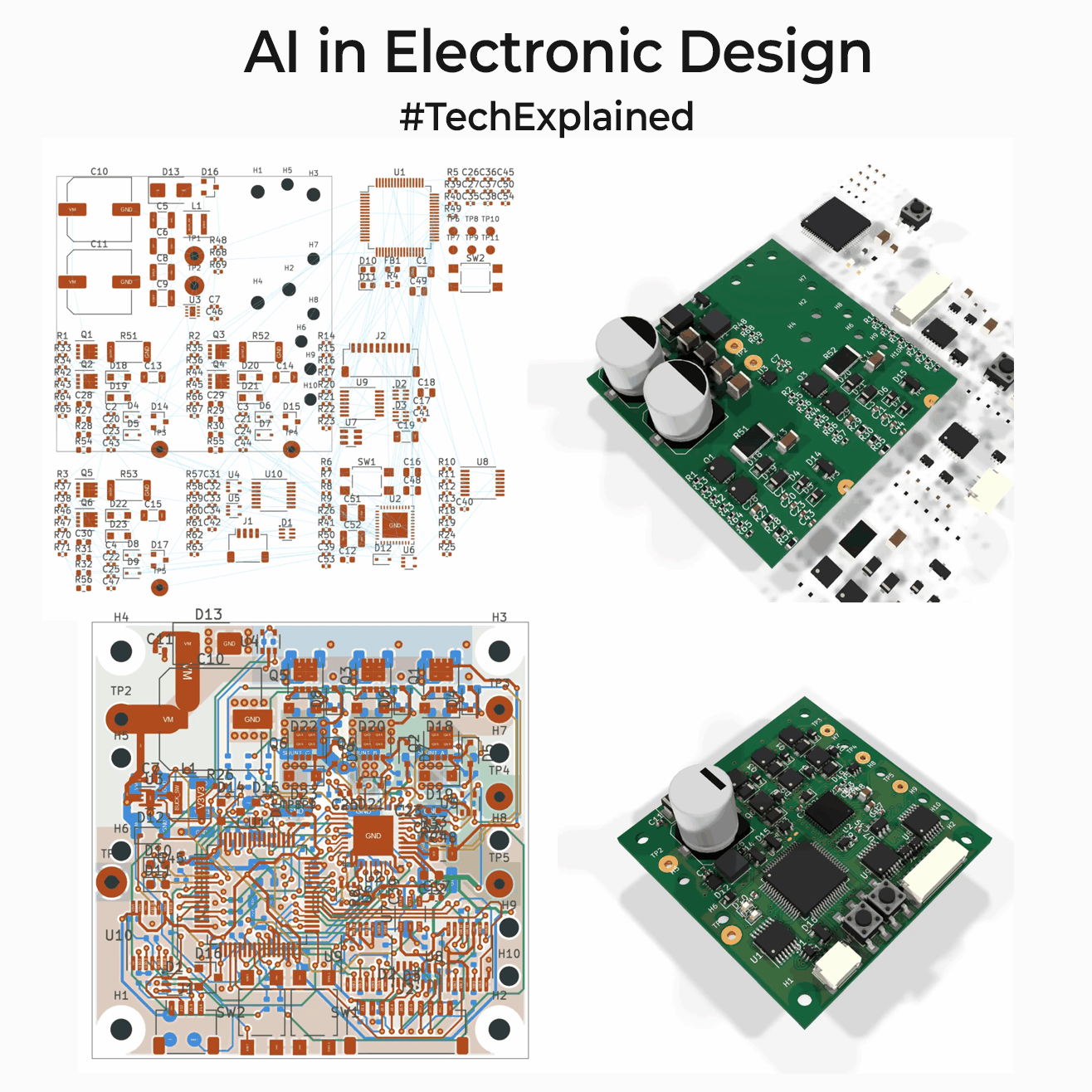
Give the system a product specification and it should be able to work backwards from it. What processor fits? Which sensors, regulators and interfaces make sense? What is in stock? Which alternatives reduce cost or supply-chain risk? It can read datasheets, compare trade-offs, build the architecture, create the schematic and eventually move into placement, routing and verification. Today’s models already help with several of these steps. I personally use them and it’s not too shabby.
After more than a decade working on embedded products, I know how much time goes into repetitive work: comparing parts, reading datasheets, creating symbols and footprints, checking reference circuits, updating BOMs and layouts. I think much of that will move to agents. Your value as an engineer shifts towards defining requirements, understanding trade-offs, spotting failure modes, validating the design and deciding what should actually be built.
I find that exciting. Most work will get displaced. The useful response is to learn these tools, change how you work and keep moving up the abstraction stack. Continuously upskill, or else you will be left behind.
My guess is that within 2-3 years, giving an AI a complete enough specification and getting most of a conventional embedded board back for engineering review will feel normal.
What do you folks think? Is 2–3 years too aggressive? Personally, I don’t think so. If anything, remember that the KiCad demo we are seeing today is likely the least capable version this technology will ever be.
0 Comments
Comments are closed.