Last week in the lab I was working on a PCB mounted on a metal surface powered by an AC to DC adapter. When I touched the painted metal surface, I felt faint buzzing/roughness on my fingers. With the power off, the same surface felt perfectly smooth. Initially, I had no idea what that feeling was. It made me go down a rabbit hole to find out what the issue was. Let’s discuss that today.
The feeling was not what you would attribute to while getting a shock. It was the same feeling when you run your finger over a rough surface. My first thought was that there was something wrong with the AC supply. I switched my switchboard to a new one at a different location in the lab, and the problem was gone. So the conclusion was it was something related to earthing. I took out a multimeter and measured the mains at the plug. Line to neutral was about 240V, which is normal. Line to earth was about 187V and neutral to earth about 53V. That told me the earth at this outlet was floating between line and neutral instead of being solidly tied to real ground.
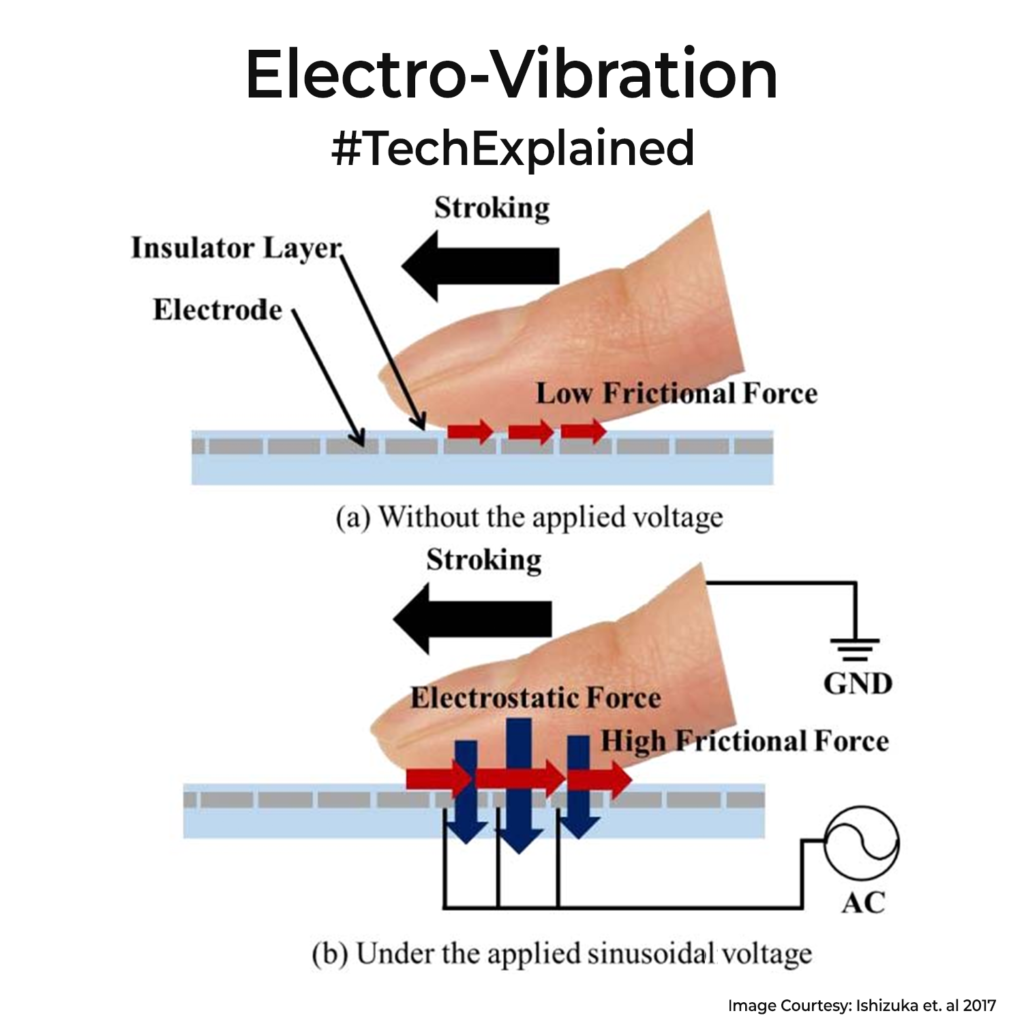
Next, I measured between the metal body and a good earth point. Through the paint coating, I saw only about 15-20V AC, meaning a small AC voltage on the metal from the supply and wiring. That leakage current would be zero with a proper earth and you would never notice it. On this bad outlet, my body was the earth, closing the circuit through my fingers and feet and creating that electro-vibration feeling. Technically a mild shock.
In haptics, this effect is called electro-vibration or electro-adhesion. Its when a conductive surface at AC voltage with a thin insulator like paint turns your finger and the metal into a tiny capacitor. The changing electric field slightly changes friction between skin and surface. This creates the microtexture feeling. Googled it and found that this tech is used for creating cool new touch interfaces.
Although I feel like I’m glorifying a shock in this post, if you ever feel something like this, don’t experiment further. Turn OFF the AC and get your hand off it. Please keep this in mind and don’t be stupid like me.