Quick Tech Tips: Oscilloscope Probing

Probe Tips

Recently someone contacted me for troubleshooting their boards for noise problems. In one of the pics they send, they were probing the circuit with one of those long standard alligator clip-styled probes for ground leads. Let’s discuss that.

Oscilloscope Probes
Probes

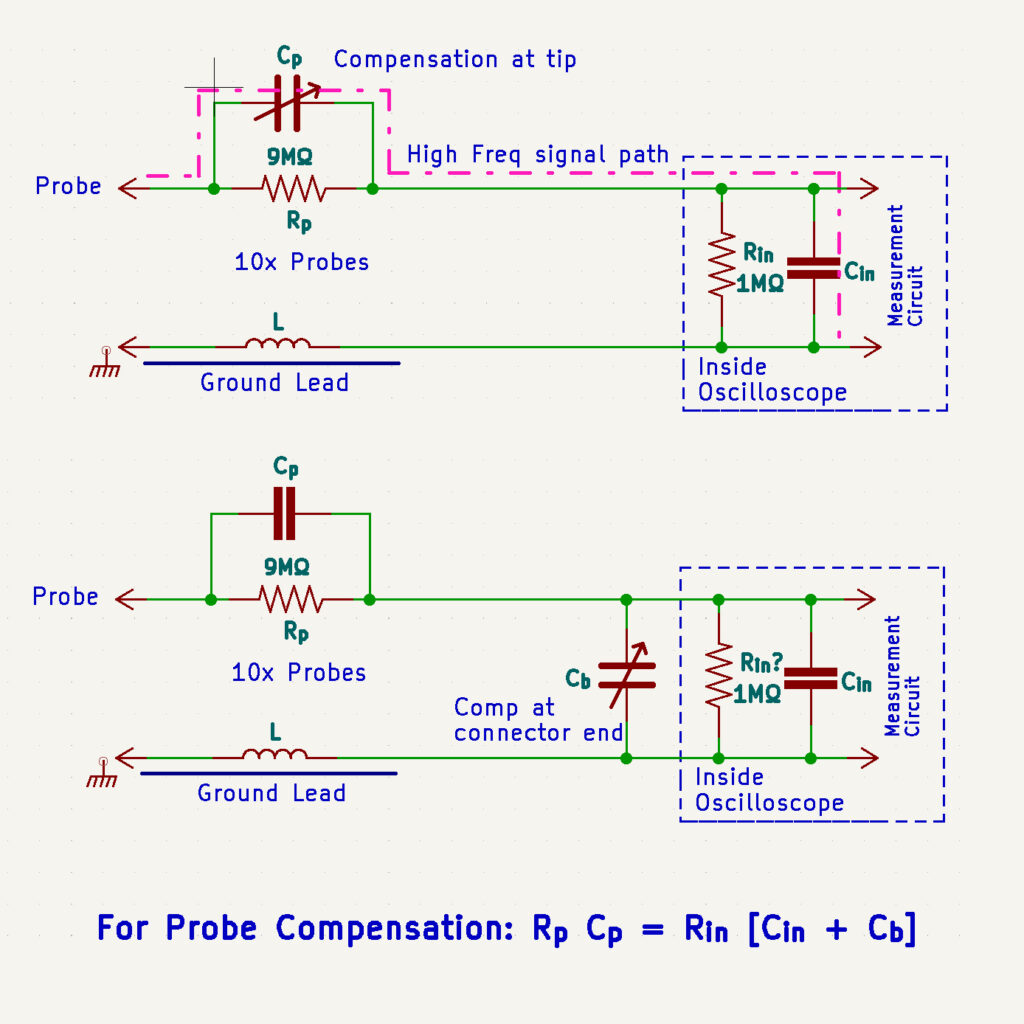
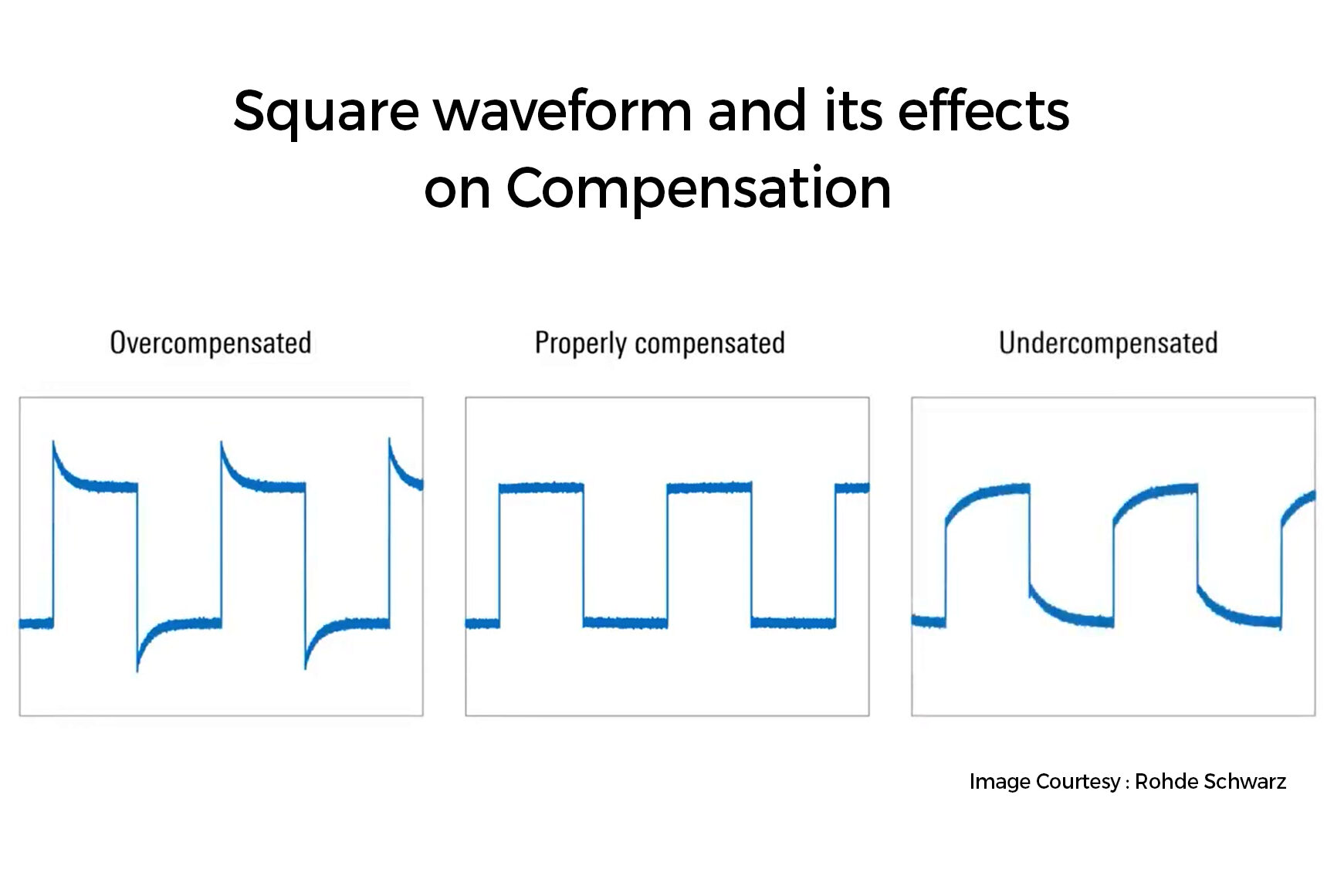
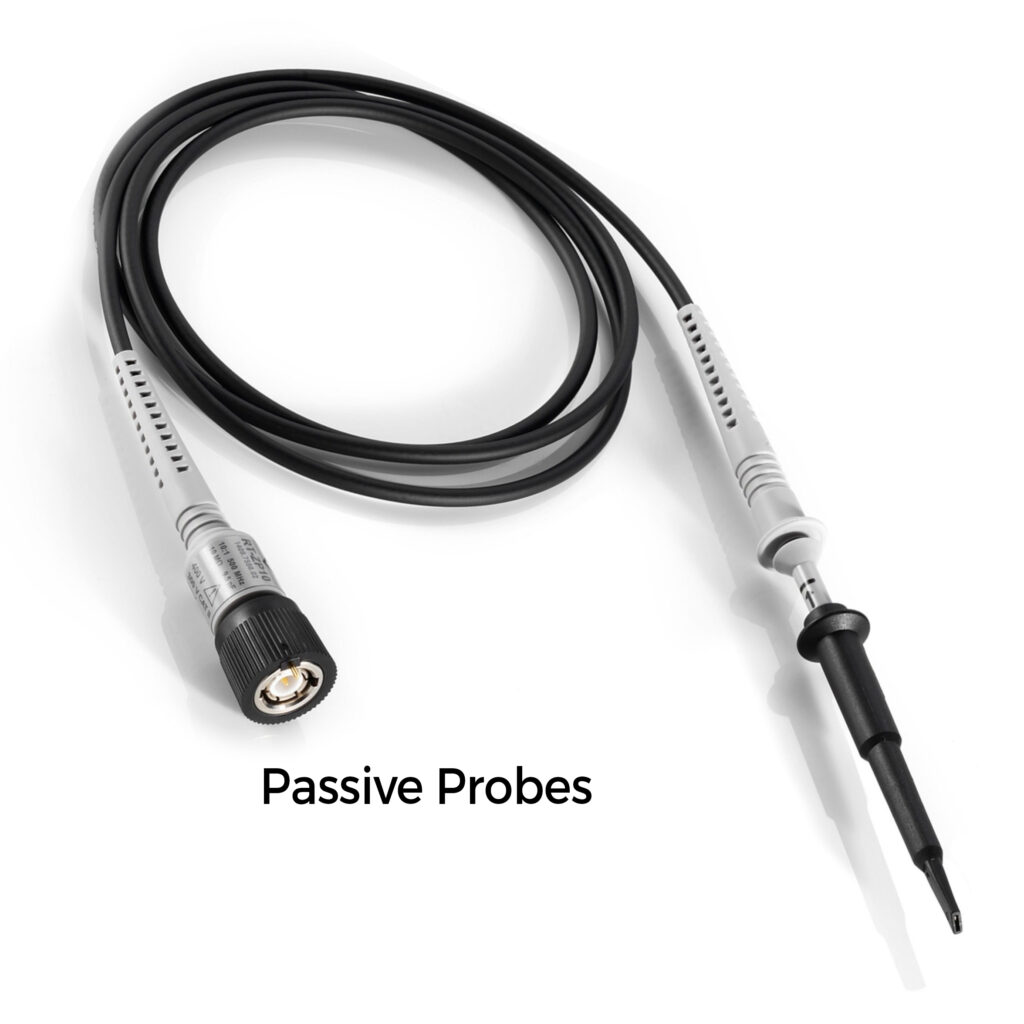
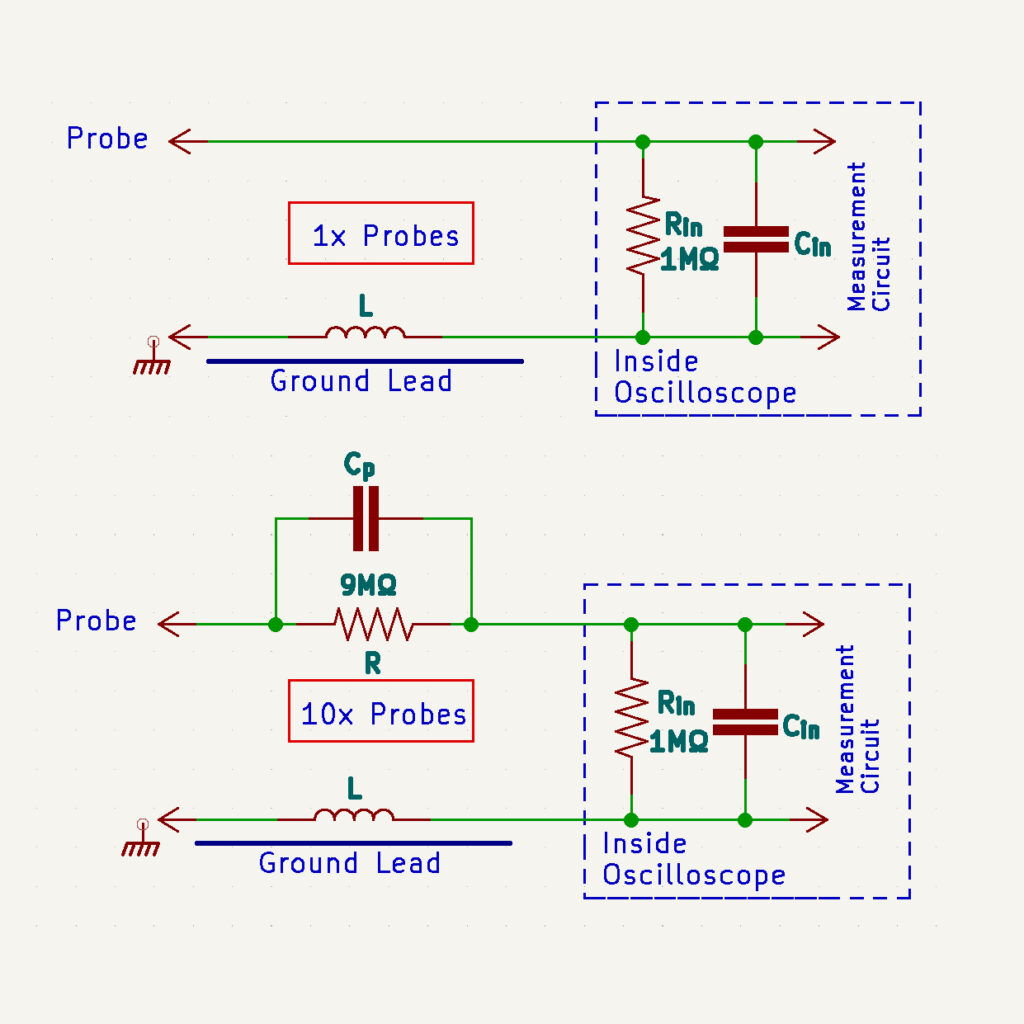
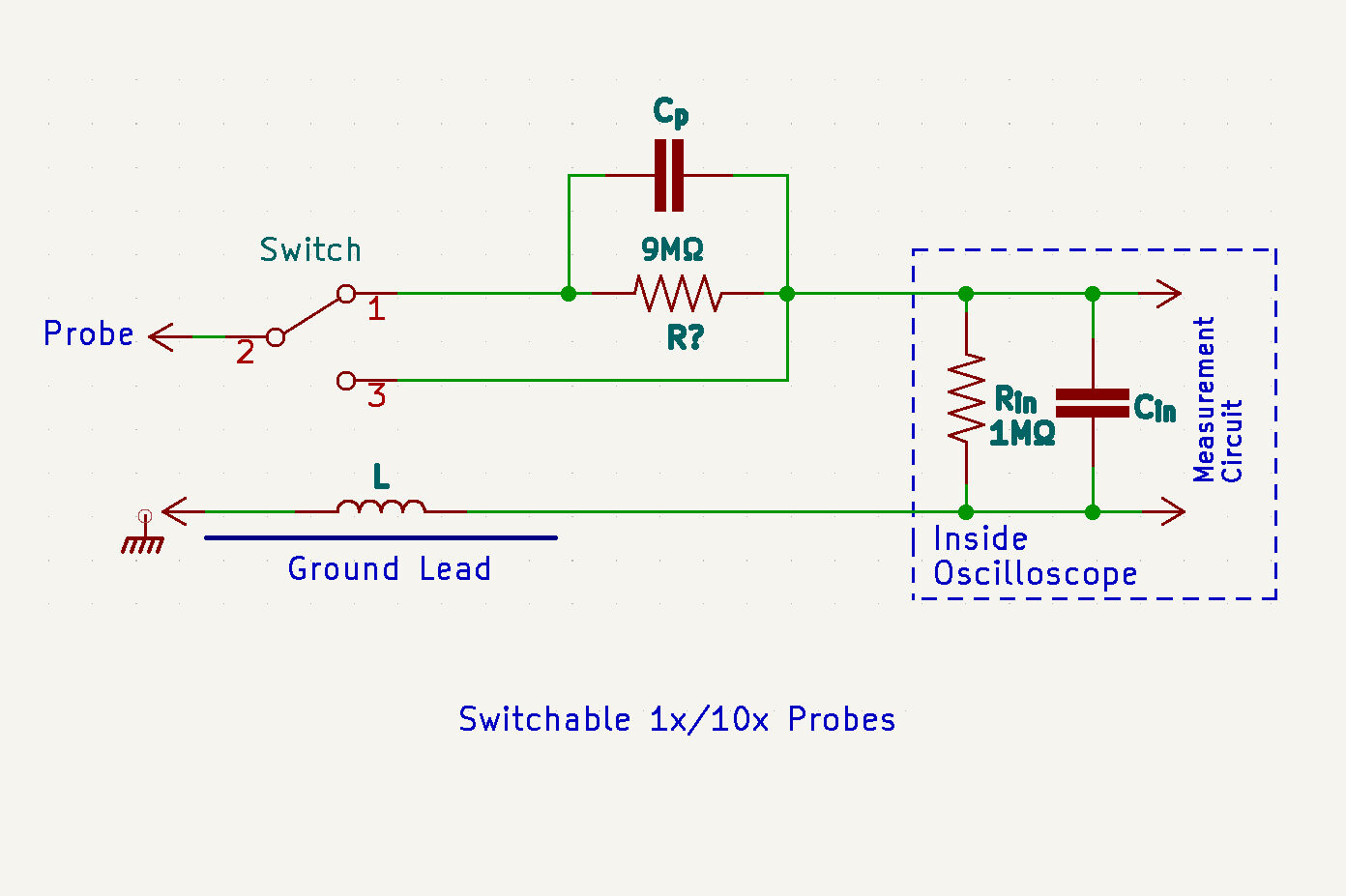
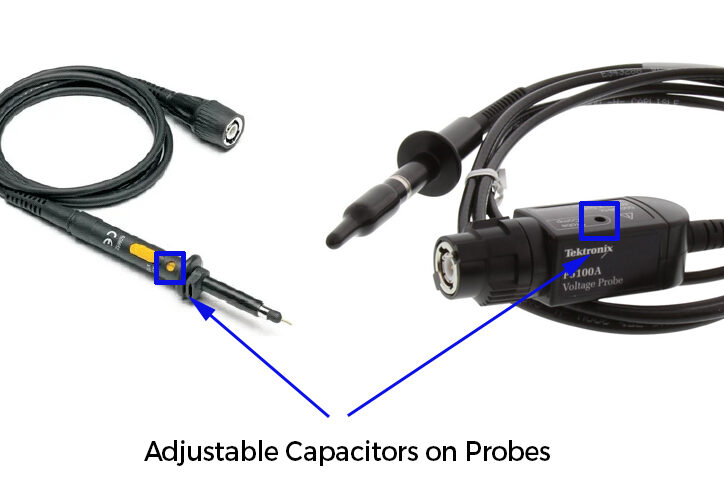
A probe’s primary job is to try to reliably transfer a signal from your circuit to the input circuitry of your oscilloscope for measurement. All the probes out there will have an input capacitance because of the compensation circuitry and the coaxial cable. You can represent this capacitor in a simplistic electrical circuit of the probe. Now the ground lead of your probe can be modeled as an inductor. When you are probing across a point in your circuit(Referenced to ground) with the long ground lead(for maybe ease of connection), what happens is that you are introducing a larger inductor in that return path. Or a fancy way of saying that is “Your loop inductance increases”. That inductance along with the probe capacitance can and will resonate when a signal with a high freq component is being measured by the probe. You will see ringing and overshoot at the edges of the signal. If you are let’s say probing a data signal(square waveform), the fundamental frequency or the data switching rate can be small, still, the ringing will be there because most circuits have a very fast-rising edge. That’s where all the high-frequency stuff lies and you will see your probe misbehaving.

So what’s the solution? Reduce the ground lead wire length to a bare minimum reducing the inductance of the leads. For that you have probes with tiny needle pins with the positive and earth leads very close to each other. This will ensure that resonance is at a much higher freq and your signal will be cleaner. You don’t have that tip in your oscilloscope kit, you can wind a small wire at the GND part as shown in the figure.

PS: Oscilloscope probes and measuring signals in itself is a fascinating topic with many nuances. If there is any interest in that, do let me know in the comments section. Might have to do a long series of posts to cover that.

If you liked the post, Share it with your friends!

Back to Basics: Solid vs MultiStranded vs Litz Wires

Let’s talk wires! When it comes to building systems, wiring between subsystems is often overlooked. The type of wire you use can significantly impact performance. Everyone knows what solid wires are. As the name suggests, it’s a wire made of a single-core material. It’s great for passing DC current with low resistance. However, it struggles with higher-frequency currents due to skin depth(Refer to Older Posts) limitations. Solid cable does not fully utilize its entire thickness to transmit current.

The multistranded wire is made up of multiple strands of smaller gauge wires that are twisted together. It is more flexible than a solid wire. Where multi-stranded wires differ from Litz wires is that Litz wires have a small insulator in between each of the wire strands. So each strand is not shorted each other as in a multistranded cable. From the basics of Skin depth, we know that current likes to travel on the outer surface for higher frequencies. Multistranded wires do perform better with more area utilization (compared to solid wires) but they can still act as an almost solid wire since everything internally is shorted. Litz wire on the other hand ensures there is individual insulation and because of that, Skin depth is large, and hence current passes through the entire cross-section of the tiny wires. This is usually why Litz wires are usually the preferred choice in high-frequency applications such as transformers, inductors, induction coils, and high-frequency power supplies. While Litz wires are more expensive and have enamel insulation that can be easily scrapped or sanded off, they are worth considering for high-frequency applications.

Experienced professionals in the industry who use Litz wires, feel free to share any other benefits you have noticed.

So, next time you’re choosing wires, consider the application carefully and choose the wire type that will give you the best performance.

Fun fact: Litz wire gets its name from the German word “litzendraht,” which means braided or stranded wire.

#BacktoBasics#Wire#Current#Electronics#Power#transmission#Skindepth

If you liked the post, Share it with your friends!
1 53 54 55 56 57 73