Casio MJ1200 Calculator Teardown

Pocket calculators are a classic example of something which has been around since the 1970s and has undergone optimised design over the years. These still do have a place in the world despite the touch-based software phone calculators out there. The tactile button press feedback is something that a heavy user will always appreciate.
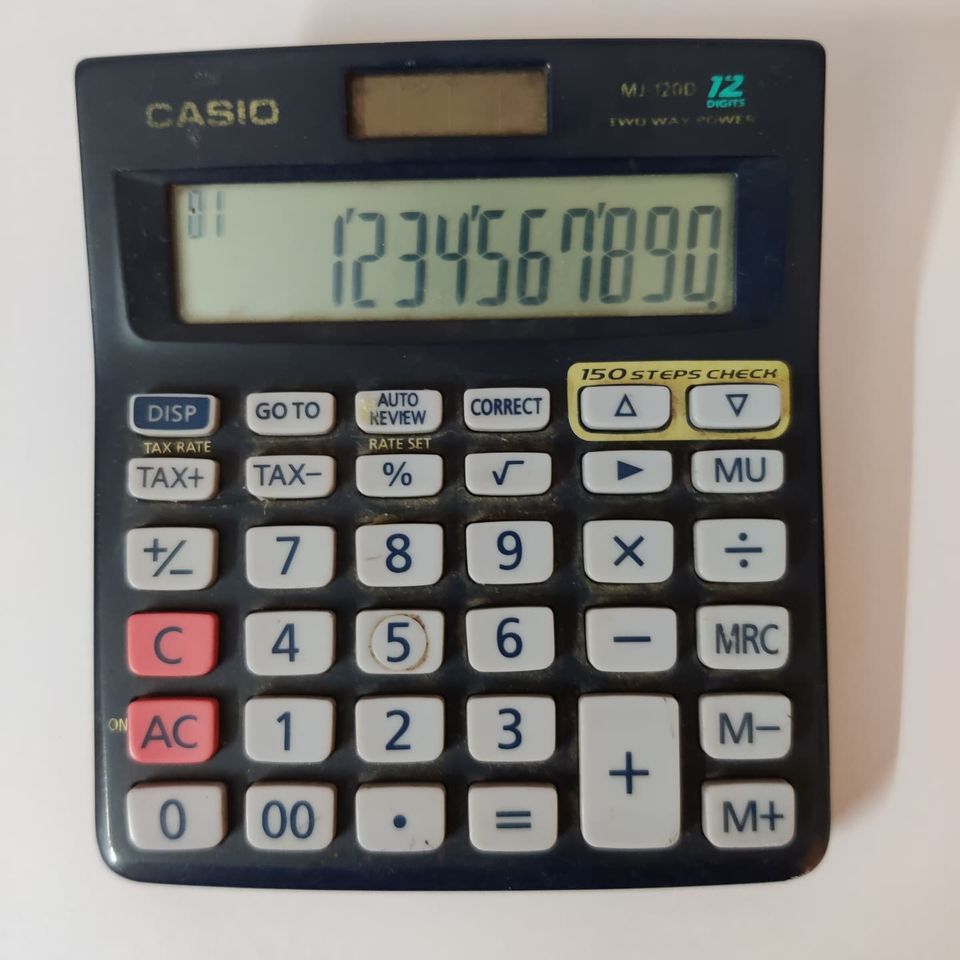
Casio Calculator Teardown

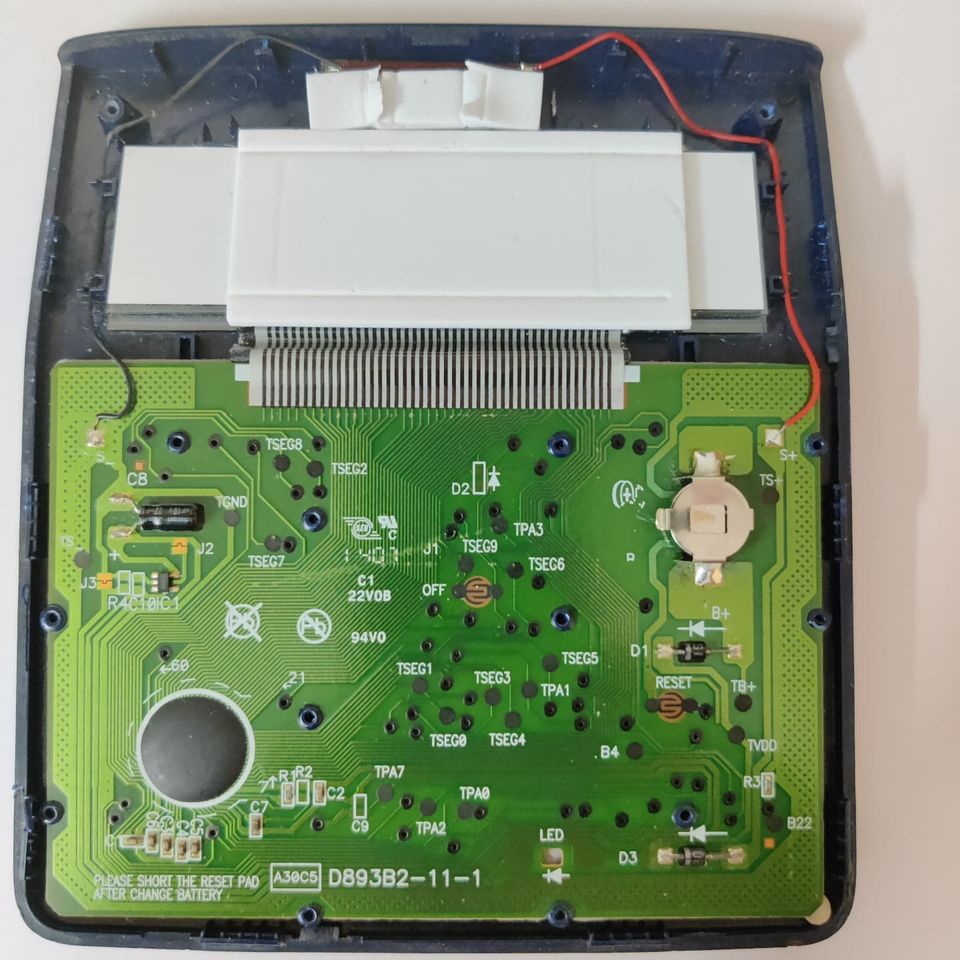
The basic building blocks of a calculator will be your power source, a matrix keypad, an array of 7 segment LCDs and an ASIC(on a black blob) built for cost. The matrix keypad will be a standard row-column arrangement with multiplexing being used to read out the button presses. The button would consist of a carbon-coated unit with a zig-zag portion on the PCB which will effectively make a short with carbon when pressed. The 7 segment LCDs are monochrome and mostly reflective based. Since most calculators don’t carry a backlight they are quite low power to drive(One of the reasons why calculator batteries seem to last forever). The LCD segment is connected by a ribbon cable which is usually glued in place in a PCB(Not soldered) with carbon tracks. If you ever see certain segments in a calculator not lighting up, try heating the cable connector on the PCB end, it should mostly work.

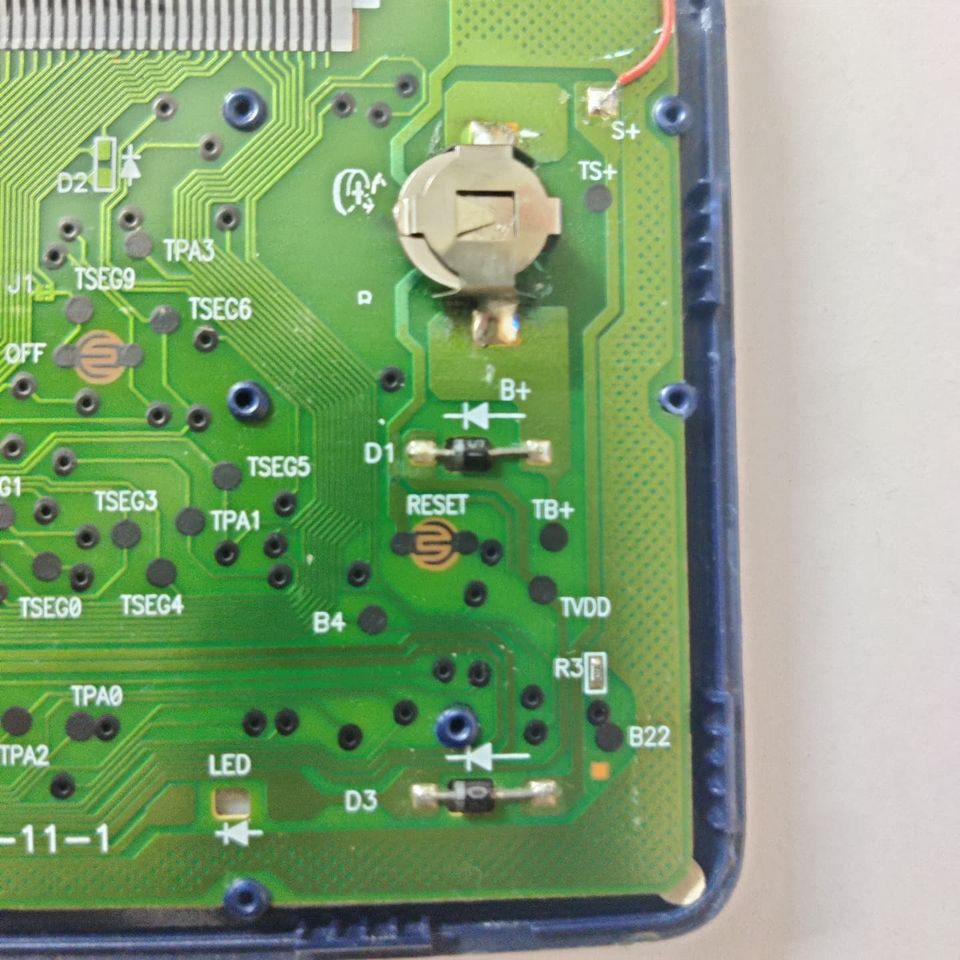
The power section of these calculators usually contains an alkaline button cell battery(1.5V, Not rechargeable). Most of the calculators come with a solar cell array to act as a dual power source. This one had 4 solar cells with a total open voltage of approx 2.5V. It uses the classic power OR-ing circuit. Both battery and solar cells feed into the same PCB track with individual Schottky diodes(Parallel). So solar does contribute to the longevity of the calculator’s battery life. The Schottky diodes in the circuit prevent the reverse charging of the battery and have a low dropout of approx 0.15V. It’s the cheapest possible arrangement based on BOM costing for powering the device. That 0.15V drop is OK for low power circuits like these but won’t scale for larger circuits and hence most IC companies make a killing with power path management ICs these days (Well that’s a discussion for another day entirely)
If you liked the post, Share it with your friends!

Back to Basics: Capacitor DC Bias Effect

MLCC(Multi-Layer Ceramic Capacitor) which most of you are using in your circuits(The usual SMD type) are divided into Class 1(Dielectric: Titanium Oxide) and Class 2(Dielectric: barium titanate). These Class 2 capacitors have problems that most of you never would consider. The capacitance value drops very drastically with the applied DC bias voltage to it.

DC Bias Capacitors

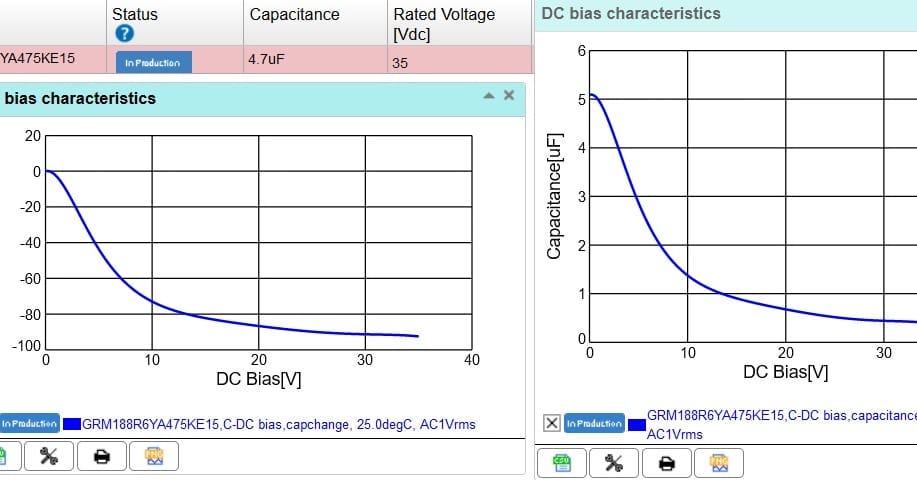
Take a look at the graph of a standard Murata capacitor(Nominal Value: 4.7μF rated for 35V). Now as the DC voltage applied to the capacitor is increased, you can clearly see that capacitance drops close to 0.5μF when it’s near its rated voltage. This will be a major issue if you are using this capacitor in circuits where capacitance value is critical like for timing or filtering. The effective capacitance will totally screw up your results when you move from the paper design to the physical board. So please consider this when you design next time. For critical applications, try to use Class 1 capacitance which is much more stable. Class 2 caps show this behaviour because of the Barium titanate dielectric used to make them.

One way to counter this problem is to use capacitors that have a rated voltage much more than what is needed for critical applications or by having the same capacitances in parallel to increase the effective capacitance to the nominal ones you design for. For MLCCs used in critical parts of your circuit always, ALWAYS, buy from reputed capacitor brands where these graphs are provided and not from knock-off unbranded ones. Else it will come back to haunt you later on and you wouldn’t even know this part is the culprit. Capacitor Package Size and its values also have an effect on the amount of value degradation. So please refer to datasheets thoroughly before selecting.
PS: Capacitors and things associated with it is a big rabbit hole in themselves. It would itself need an entire series of posts. I can definitely consider this for the future if there is enough interest in these basic topics.

If you liked the post, Share it with your friends!
1 84 85 86 87 88 99