Yesterday many of you in India may have received the test alert with your phone going off in vibration and sound mode from the Govt. It got me to look up the tech stack that enables this. I wanted to explain it because it looks like an SMS, but it really isn’t.
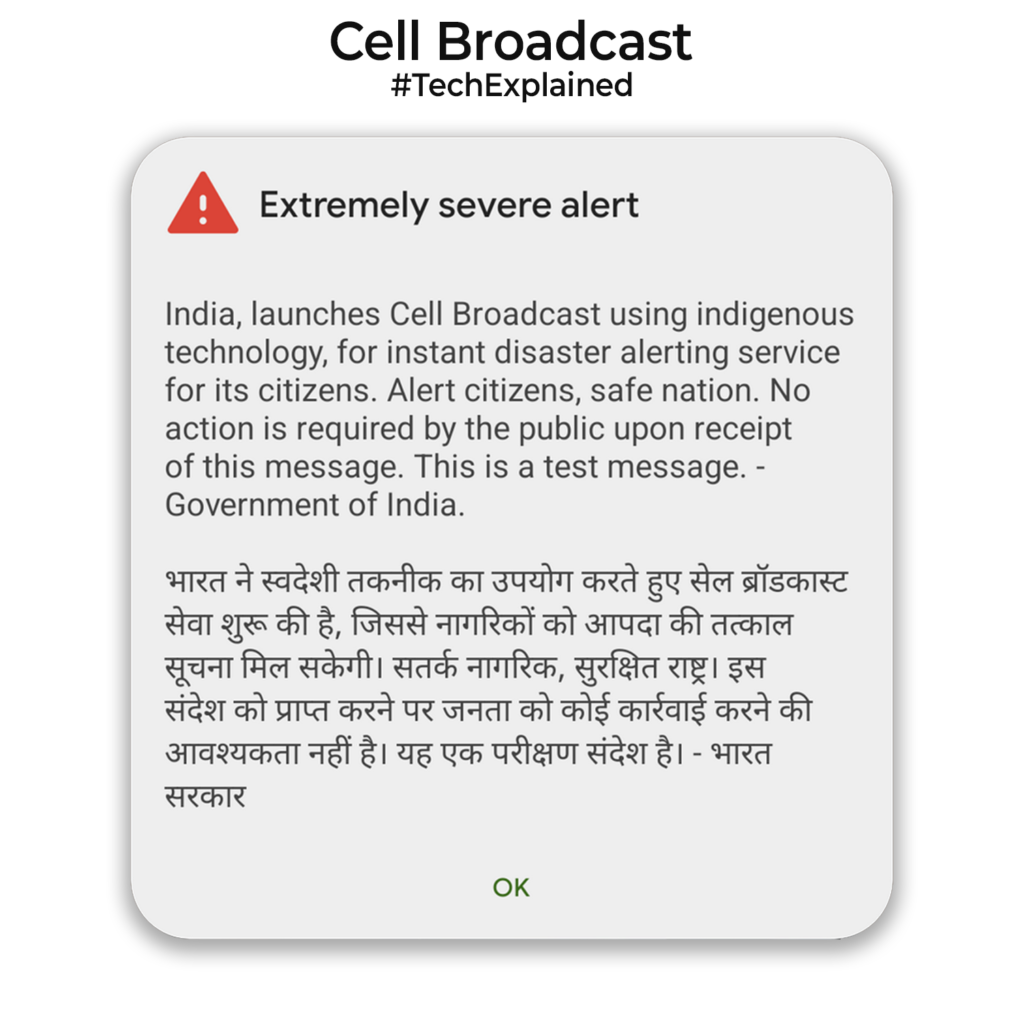
Fundamental tech is called Cell Broadcast. It’s a one-to-many setup. A tower broadcasts an alert to compatible phones connected to that cell. Your phone does not need mobile data. It only needs to be in coverage area. Whereas SMS is one-to-one. The network sends a message to each phone number. That is fine for normal updates, but millions of messages can slow down during a cyclone, earthquake, gas leak or war.
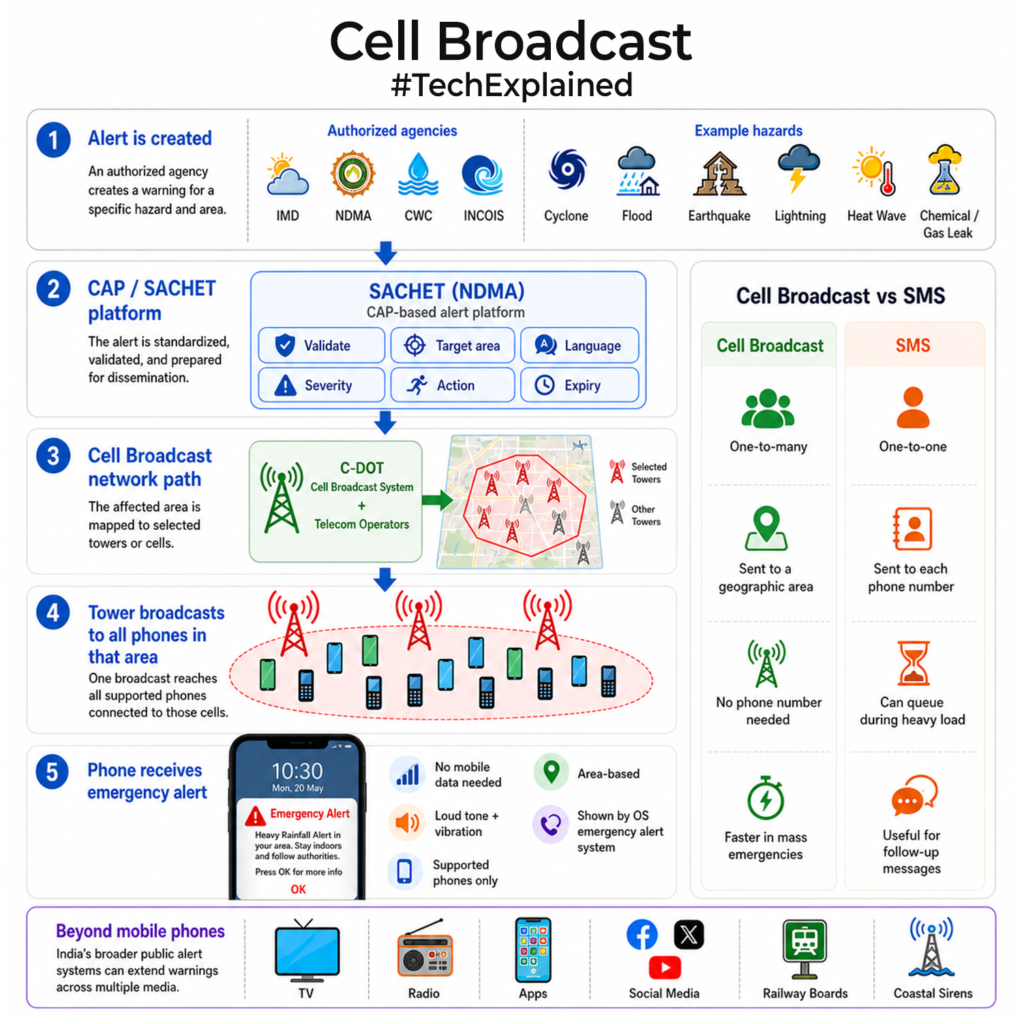
Indian stack seems built around SACHET, the National Disaster Management Authority’s CAP-based (Common Alerting Protocol) Alert System, developed by C-DOT. Visualise it as an alert form that carries the event, area, severity, language, action and expiry time.
I think the flow might be something like a Govt agency like IMD creating a warning. SACHET validates and routes it. C-DOT’s Cell Broadcast system connects it to telecom operators. The operator maps the area to towers, and then selected towers broadcast the alert directly to phones.
Once the tower broadcasts it, the phone’s modem listens for that alert channel and passes it to the OS as an emergency alert, not as a normal inbox message. That is why it can pop up with a loud tone and vibration without needing mobile data. In SMS, the network addresses your number and waits to deliver a message to you individually.
It can work on basic phones too, but only if that phone supports Cell Broadcast. If the phone is off, in airplane mode or out of coverage, it will not receive it.
I read that SACHET is not only for mobiles. The same platform can push warnings through SMS, Cell Broadcast, apps, TV, radio, social media, railway station boards, and coastal sirens. Its scale is impressive from a tech POV.
BTW: A Cell Broadcast alert does not need your phone number to reach you, just being in coverage is fine.